


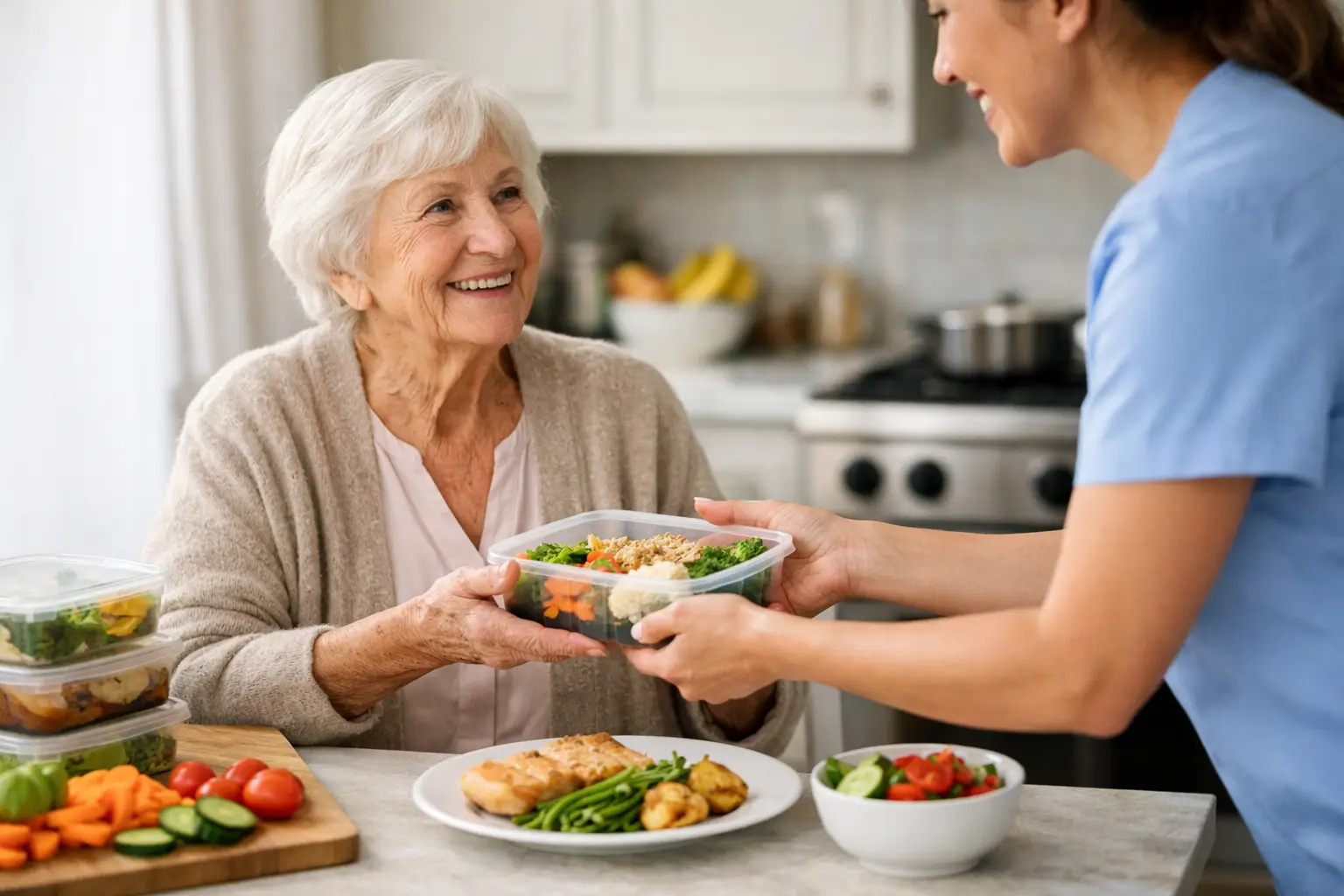
A parent who once cooked for everyone may suddenly start skipping meals, forgetting ingredients on the stove, or living on toast and coffee. That shift can be hard to see, especially when your loved one wants to stay independent. Meal preparation for elderly at home is often where families first notice that a little extra support could make daily life safer, healthier, and more comfortable.
Food affects far more than hunger. For older adults, regular meals can support energy, strength, hydration, mood, and recovery after illness or surgery. Just as importantly, a well-prepared meal brings comfort and routine. It helps a person feel cared for without taking away their dignity.
Why meal preparation for elderly at home matters
As people age, eating well can become more complicated than it looks from the outside. Appetite may decrease. Dentures may make chewing difficult. Arthritis can turn chopping vegetables or opening containers into a painful task. Memory changes can lead to missed meals, repeated meals, or spoiled food left unnoticed in the refrigerator.
There is also the matter of safety. A senior who is still determined to cook may have trouble lifting heavy pots, reaching high shelves, or remembering whether the burner was turned off. Families often feel torn. They want to respect independence, but they also want peace of mind.
That is why meal support at home is so valuable. It can preserve familiar routines while reducing daily risks. In many cases, the goal is not to take over everything. It is to make meals easier, more nourishing, and less stressful.
Start with the person, not just the menu
Good meal planning begins with listening. A healthy meal is not helpful if your loved one will not eat it. Preferences, culture, appetite, chewing ability, and routine all matter.
Some seniors like a warm breakfast and a lighter dinner. Others eat best with several small meals instead of three larger ones. A person living with dementia may do better with simple foods that are easy to recognize and eat by hand. Someone recovering from surgery may need more protein and fluids, while another person may need lower-sodium meals. It depends on the individual, and that is why one-size-fits-all meal plans often fail.
Try to notice patterns before making big changes. Which foods get finished? Which are left untouched? Does your loved one eat better when someone sits with them? Are there signs of difficulty swallowing, weight loss, or dehydration? These details can tell you more than a nutrition article ever will.
What a safe and senior-friendly kitchen looks like
The kitchen setup can make meal preparation easier or much harder. Small changes often have a big effect. Frequently used items should be kept within easy reach so there is less bending and stretching. Sharp knives, heavy cookware, and cluttered counters can create unnecessary risk.
Pre-cut ingredients, lightweight dishes, and clear food labels help many older adults stay involved in the process. If memory is a concern, using a microwave, electric kettle, or automatic shut-off appliance may be safer than relying on the stove. For some families, the best option is to prepare meals ahead of time and leave simple reheating instructions in large print.
This is also a good time to check the refrigerator and pantry. Expired food, duplicate items, or empty staples can make daily meals more confusing than they need to be. A clean, organized kitchen supports confidence as much as convenience.
Simple meals are often the best meals
Families sometimes feel pressure to create elaborate menus, but that is rarely necessary. Senior meal prep works best when it is simple, balanced, and realistic. A meal can be as straightforward as baked chicken with soft vegetables, oatmeal with fruit and peanut butter, soup with crackers, or scrambled eggs with toast and sliced avocado.
The goal is consistency, not perfection. Protein, fiber, healthy fats, and hydration matter, but the meal also has to be manageable. If a loved one gets tired easily, a plate with too many components may feel overwhelming. Familiar foods are often more successful than trendy health recipes.
Texture matters too. Soft-cooked vegetables, tender meats, yogurt, smoothies, oatmeal, mashed sweet potatoes, and rice dishes can be easier to eat than dry or crunchy foods. If chewing or swallowing seems difficult, that should not be ignored. Families should pay close attention and seek appropriate professional guidance when needed.
Planning ahead reduces stress for everyone
One of the most practical parts of meal preparation for elderly at home is creating a routine. When meals are planned in advance, there is less last-minute scrambling and less chance that your loved one will skip eating altogether.
A simple weekly plan is often enough. You do not need a detailed spreadsheet. You just need to know what will be available for breakfast, lunch, dinner, and snacks. Repeating a few favorite meals each week is perfectly fine. In fact, familiar repetition can be very helpful for seniors who thrive on routine.
Batch cooking can also save time. A pot of soup, turkey meatballs, baked fish, or cooked rice can be portioned into labeled containers for the week. If the person lives alone, single-serve portions may be easier and safer than large containers that require lifting and dividing.
There is a trade-off here. Too much meal prep at once can lead to waste if appetite changes or the person gets bored with the same foods. For some households, preparing two or three days at a time works better than an entire week.
Nutrition concerns families should watch closely
Even when food is available, older adults may still not be getting enough nourishment. Low appetite is common, but it should not always be brushed off as normal aging. Unplanned weight loss, weakness, increased confusion, or frequent fatigue may all be signs that eating and drinking need more support.
Hydration deserves special attention. Many seniors do not feel thirsty as often as they used to, and some limit fluids because they worry about getting to the bathroom in time. That can quickly affect strength, balance, and alertness. Water, milk, soup, herbal tea, and high-water foods like fruit can all help.
Medication schedules can also affect appetite, taste, and digestion. Some people feel nauseated, while others need to eat before taking certain pills. If meals seem to clash with medications or medical instructions, families should be careful not to guess.
When help in the home makes a real difference
For many families, the challenge is not knowing what meals to make. It is finding the time and consistency to prepare them. If you are balancing work, children, and caregiving, daily meal support can become exhausting.
This is where non-medical in-home care can ease the pressure. A trusted caregiver can help with grocery organization, meal planning, food preparation, safe reheating, companionship during meals, and cleanup. That support can be especially meaningful for seniors who are isolated, recovering from an illness, or living with memory loss.
The emotional side matters here. Many older adults eat more regularly when someone is present. A shared meal or even gentle encouragement can turn eating from a chore into a moment of connection. At Delora Care, this kind of support is part of what helps families feel less alone while their loved ones remain safe and comfortable at home.
A few signs it may be time to step in
Sometimes the need for help builds slowly. Sometimes it becomes obvious all at once. If you notice burned pans, spoiled food, unpaid grocery bills, repeated takeout containers, empty refrigerators, or noticeable weight loss, it may be time to look more closely at daily meal routines.
You may also hear changes in the way your loved one talks about food. They may say cooking is too tiring, nothing tastes good anymore, or they are just not hungry. Those comments deserve attention, especially if they are new.
Support does not have to mean giving up independence. Often, it means putting the right help around a person so they can keep living at home with more confidence and less risk.
A good meal does more than fill a plate. It brings steadiness to the day, comfort to the home, and reassurance to the family. When meals become simpler, safer, and more consistent, home can keep feeling like home.
